iCloud Drive to Drime Transfer: 3 Ways to Move Your Apple Files to European Cloud
Learn how to transfer files from iCloud Drive to Drime using three methods: browser download/upload, macOS Finder bridge, or cloud-to-cloud transfer with CloudsLinker. Migrate your Apple ecosystem files to privacy-focused European storage.
Introduction
Moving from iCloud Drive to Drime means shifting from Apple's integrated ecosystem to a European privacy-first platform with end-to-end encryption. Whether you're concerned about data residency, privacy, or just want your files outside the Apple walled garden, the migration is straightforward once you pick the right method. This guide covers three approaches: a quick browser move for small folders, a Finder-based sync for macOS users who want local control, and a cloud-to-cloud transfer with CloudsLinker for hands-off migration of larger libraries.
iCloud Drive is Apple's cloud storage service, deeply integrated with macOS, iOS, and iPadOS. It syncs documents, desktop folders, and app data across Apple devices seamlessly. The service includes 5GB free storage with paid upgrades through iCloud+.
- Apple ecosystem integration: works natively with Finder, Files app, and Apple apps.
- Device sync: automatic sync across Mac, iPhone, and iPad.
- Optimize Storage: can store files in the cloud to save local space.
Drime is a European-built cloud workspace that blends secure file storage with modern collaboration tools. It positions itself as a private, all-in-one environment for teams and individuals who want control over their data with GDPR compliance.
- End-to-end encryption: files are protected throughout storage and sharing.
- European data residency: data stays in Europe with GDPR compliance.
- Cross-platform: not locked to any ecosystem.
Pick a Method in 30 Seconds
Browser Transfer
Works on any device. Best for small folders.
Finder Bridge
Use iCloud Drive in Finder + Drime Desktop for local control.
Cloud-to-Cloud
Ideal for large libraries without local bandwidth limits.
Method 1: Download from iCloud.com, Upload to Drime (Browser)
Trade-off: manual process, requires downloading to local storage first.
Step 1: Download files from iCloud.com
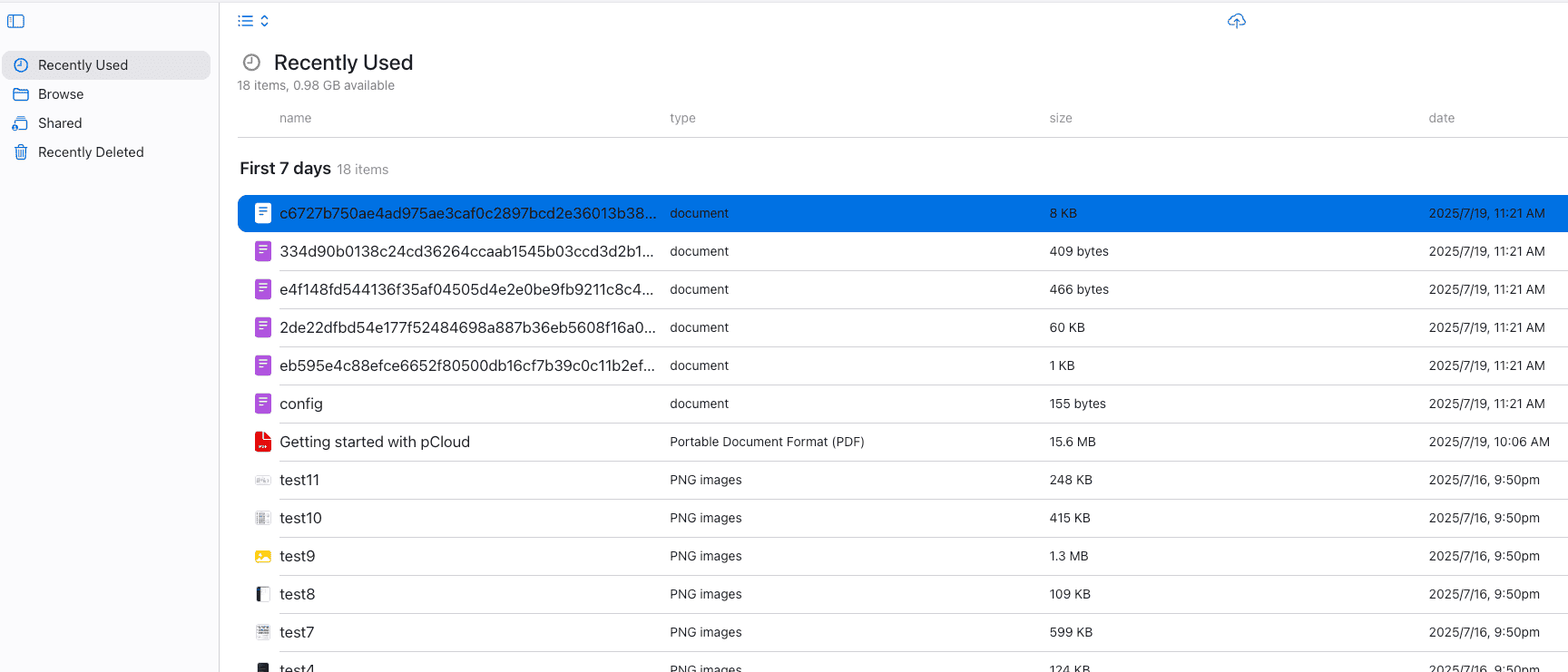
Open iCloud.com in your browser and sign in with your Apple ID. Navigate to iCloud Drive, select the files or folders you want to migrate, and click the download button.
iCloud will package selected items into a ZIP file. For large downloads, consider selecting smaller batches to avoid timeout issues.
Step 2: Extract and organize locally
Unzip the downloaded archive and verify the folder structure. This is a good time to rename folders or remove files you don't need in Drime.
Step 3: Upload to Drime
Open the Drime web dashboard, navigate to your target folder, and upload the extracted files via drag-and-drop. Files are encrypted during upload.
Method 2: macOS Finder Bridge (iCloud Drive + Drime Desktop)
Trade-off: requires sufficient local disk space for files.
On macOS, iCloud Drive appears directly in Finder. You can copy files to a local folder, then use Drime Desktop to sync them to your encrypted storage.
- Ensure files are downloaded locally: If you use "Optimize Mac Storage," right-click folders in iCloud Drive and select "Download Now" to ensure files are actually on your Mac.
- Create a staging folder: Make a new folder on your Mac (e.g., "iCloud-to-Drime") outside of iCloud Drive.
- Copy files: Drag files from iCloud Drive in Finder to your staging folder. Wait for the copy to complete.
- Install Drime Desktop: Download and install the Drime desktop app for macOS.
- Set up sync: Configure Drime Desktop to sync your staging folder to a destination in Drime.
- Verify and clean up: Once sync completes, verify files in Drime, then delete the local staging folder to free space.
Benefits of this approach
- Full visibility into what's being transferred.
- Easy to reorganize files before they reach Drime.
- Pause and resume capability through Drime Desktop.
Watch out for
- Files showing cloud icons — these aren't downloaded yet.
- Running out of disk space on smaller Mac drives.
- Accidentally syncing the iCloud Drive folder itself.
Method 3: Cloud-to-Cloud Transfer with CloudsLinker
Trade-off: requires authorizing third-party access to iCloud.
CloudsLinker can connect to iCloud Drive and transfer files directly to Drime without downloading to your computer. This is the fastest option for large migrations or when local bandwidth is limited.
How it works
- Connect your iCloud account as the source.
- Connect your Drime account as the destination.
- Select folders and start the transfer.
Why choose this method
- No local storage needed.
- Transfers continue when your device is off.
- Works from any platform, not just macOS.
Step-by-step setup
- Open CloudsLinker and create a new transfer task.
- Add iCloud Drive as the source. You'll need to authenticate with your Apple ID.
- Add Drime as the destination. Generate an access token from the Drime dashboard under Settings → Developer.
- Browse your iCloud Drive and select the folders to migrate.
- Choose transfer options. "Skip existing files" is recommended for first-time migrations.
- Start the transfer and monitor progress from the dashboard.
Recommended settings
- Skip existing files to prevent duplicates.
- Use file filters to exclude .DS_Store and system files.
- Start with a test folder before full migration.
After the transfer
- Verify folder structure and file counts in Drime.
- Check error logs for any failed transfers.
- Save the task for incremental syncs later.

| Category | iCloud Drive | Drime |
|---|---|---|
| Security model | End-to-end encryption for some data; server-side for files. | End-to-end encryption for all files. |
| Ecosystem | Deeply integrated with Apple devices and apps. | Platform-agnostic, works on all major OS. |
| Data residency | Data stored globally based on Apple's infrastructure. | European data residency with GDPR compliance. |
| Best-fit use case | Apple ecosystem users who want seamless sync. | Privacy-focused users who want European data control. |
Before You Start: Quick Prep Checklist
- Download cloud-only files: If using Optimize Mac Storage, download files locally first.
- Generate Drime token: Create a developer token in Drime Settings before connecting tools.
- Check storage space: Ensure you have enough Drime storage for your iCloud data.
- Plan folder structure: Decide how you want files organized in Drime before migrating.
- Test with a small folder: Validate the process works before moving your entire library.
- Consider app data: Some iCloud data is app-specific and may not transfer cleanly.
FAQ
Conclusion
The best iCloud Drive to Drime method depends on your data size and how integrated you are with Apple's ecosystem. For a few folders, the browser route is simple. If you're on a Mac and want local verification, using Finder as a bridge works well. For large libraries or cross-platform users, CloudsLinker handles the transfer in the cloud without tying up your device. Start with a test folder, confirm everything looks right in Drime, then move the rest.
Online Storage Services Supported by CloudsLinker
Transfer data between over 48 cloud services with CloudsLinker

OneDrive

Google Drive

Google Photos

Shared Drive

OneDrive for Business

Dropbox

Box

Mega

pCloud

Yandex
ProtonDrive

AWS

GCS

iDrive

Storj

DigitalOcean

Wasabi

1fichier

PikPak

TeleBox

OpenDrive

Backblaze B2

Fastmail file

SharePoint

Nextcloud

ownCloud

Premiumize me

HiDrive

Put.io

Sugar Sync

Jottacloud

Seafile

Ftp

SFtp

NAS

WebDav

4shared

Icedrive

Cloudflare R2

Scaleway

Doi

iCloud Drive
iCloud Photos

FileLU

Zoho WorkDrive

Telia Cloud / Sky

Drime

Filen
Didn' t find your cloud service? Be free to contact: [email protected]
Further Reading
Effortless FTP connect to google drive: Transfer Files in 3 Easy Ways
Learn More >
Google Photos to OneDrive: 3 Innovative Transfer Strategies
Learn More >
Google Photos to Proton Drive: 3 Effective Transfer Techniques
Learn More >