Efficient Backup of Google Photos to Dropbox: A Step-by-Step Guide
Master the art of seamlessly transferring your Google Photos to Dropbox. This guide provides detailed instructions for secure and efficient backup, ensuring your memories are safeguarded.
Introduction
In today’s ever-evolving digital ecosystem, safeguarding our digital memories becomes paramount. This guide illuminates the pathway for transferring your cherished memories from Google Photos to Dropbox. It accentuates the importance of secure backup strategies while simplifying the process for enhanced accessibility and sharing capabilities across devices. If you want the entire library with its albums rather than a hand-picked selection, the Google Takeout route has Takeout deliver the export to Dropbox and CloudsLinker unpack it there.
Quick Navigation
Understanding Google Photos
Google Photos, acclaimed for its intelligent photo management and sharing capabilities, serves as a pivotal platform for storing countless digital memories. With features like smart organization, powerful search capabilities, and automatic backup, Google Photos stands as a cornerstone for individuals looking to preserve their digital legacy efficiently and securely.
Transitioning your digital memories to Dropbox not only amplifies the safety of your cherished moments but also leverages Dropbox's streamlined features for improved management and privacy. This strategic move is akin to stepping into an enhanced realm of digital preservation, offering both security and ease of access.
Google Photos Highlights
- Intelligent Organization: Automatically sorts photos and videos, making it easy to find and share your memories.
- Advanced Search Capabilities: Locate images based on content, date, and more, simplifying the retrieval process.
- Effortless Backup: Provides seamless automatic backup options, ensuring your memories are always safeguarded.
Benefits of Using Google Photos
Google Photos offers a blend of convenience, security, and accessibility, simplifying the process of managing and sharing digital memories. However, integrating these memories with Dropbox opens new possibilities for enhanced data protection, sophisticated organization tools, and versatile sharing options.
- Seamless Integration: Facilitates easy transition and backup of memories to various platforms, enhancing digital content management.
- Reliable Storage Solution: Ensures your photos and videos are stored safely, accessible anytime and from any device.
Exploring Dropbox
Dropbox emerges as a frontrunner in cloud storage solutions, revolutionizing the way we store, manage, and share our digital files. Known for its stringent security measures, Dropbox offers a robust platform for safekeeping your digital memories, with features that support live collaboration, extensive file sharing, and seamless accessibility.
Choosing Dropbox for your digital photos and videos not only enhances the security of your memories but also provides a sophisticated ecosystem for organizing and accessing your files. With Dropbox, your digital memories gain an extra layer of protection and are easily shareable with loved ones, reflecting a modern approach to digital storage.
Dropbox Features
- Comprehensive Encryption: Ensures the highest level of security for your files, with end-to-end encryption measures.
- Streamlined File Sharing: Offers intuitive tools for sharing files and folders, making collaboration and memory sharing effortless.
- Accessible Anywhere: Keeps your files within reach from any device, ensuring your digital memories are always accessible.
Advantages of Using Dropbox
- Enhanced Security Measures: With Dropbox's focus on security, rest assured that your digital memories are protected with state-of-the-art encryption.
- Superior Organizational Tools: Dropbox's organizational features offer a refined system for effective management of your digital memories.
- Global Accessibility: Ensures that your photos and videos can be accessed from any location, providing unparalleled convenience in cloud storage.
Seamlessly Backing Up Google Photos to Dropbox: Why Make the Move?
Backing up your Google Photos to Dropbox brings significant improvements to your digital memory management strategy:
- Enhanced Security for Your Memories: Dropbox's robust security protocols, including advanced encryption, ensure your photos and videos are protected at a level superior to Google Photos. This safeguarding makes Dropbox an ideal choice for privacy-conscious users.
- Superior Organization of Digital Memories: Dropbox offers sophisticated tools for managing your digital photos and videos, allowing for better organization, searchability, and control over your memories compared to Google Photos.
- Accessible Anywhere, Anytime: With Dropbox, access to your digital memories isn't confined to a single platform; you can reach them from any device, anywhere, ensuring your photos and videos are always within your grasp.
- Advanced Sharing Capabilities: Dropbox introduces more versatile and secure sharing options, including link sharing with password protection and expiration dates, providing more refined control over who views your memories.
Transitioning from Google Photos to Dropbox isn't merely about transferring files; it's about elevating the security, organization, and accessibility of your digital memories. Dropbox's advanced features offer compelling reasons to choose it for backing up your precious moments.
Preparing Your Google Photos for Backup to Dropbox
To facilitate a seamless backup of your Google Photos to Dropbox, it's important to take some preparatory steps. Here's how to ready your memories for the transition:
- Verify Accounts on Both Platforms: Ensure your Google Photos and Dropbox accounts are active and in good standing. Double-check that all memories you intend to back up are present and accounted for in Google Photos.
- Organize Your Memories: Before initiating the backup, consider organizing your photos and videos within Google Photos. Categorizing your memories can simplify the backup process and make managing your files in Dropbox easier.
- Check Dropbox Storage Capacity: Ensure your Dropbox account has enough space to accommodate your Google Photos backup. Consider upgrading your Dropbox plan if necessary to avoid any interruptions during the backup process.
By adequately preparing your accounts, organizing your digital memories, and ensuring sufficient storage on Dropbox, you pave the way for a smooth and efficient backup experience. These steps not only safeguard your memories during the transition but also optimize your usage of Dropbox's cloud storage capabilities.
Google Photos Backup to Dropbox Guide
Step 1: Export Photos from Google
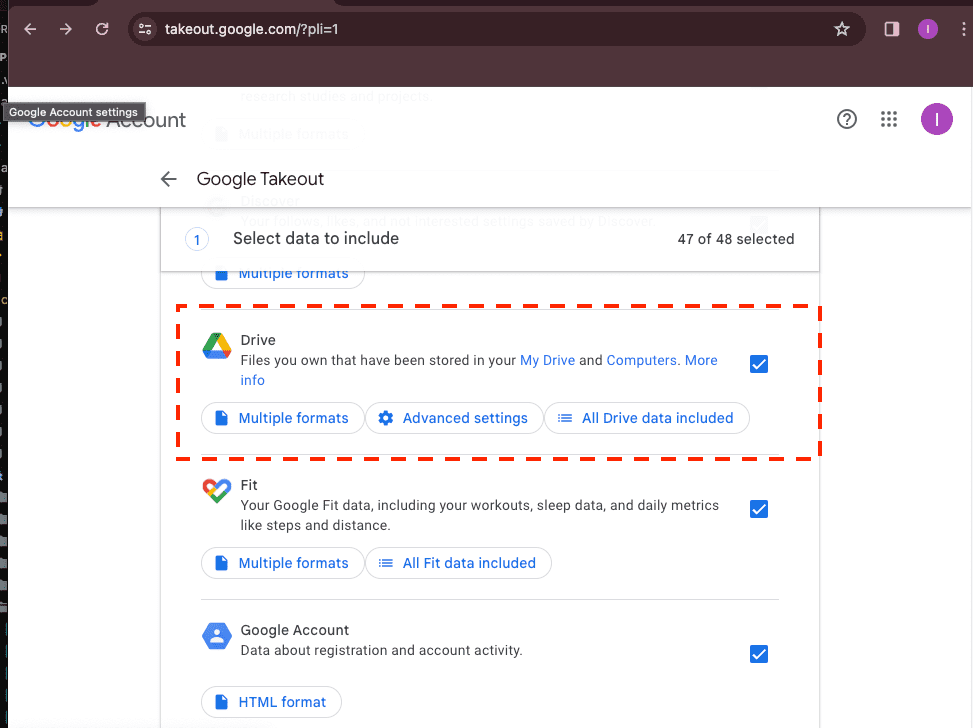
Start by visiting the Google Takeout page at https://takeout.google.com/. Sign in with your Google account, and navigate to the 'Select data to include' section. Scroll down to find and select 'Google Photos'. Customize your export settings based on your preferences, then click 'Next step' to proceed with creating your export file.
Step 2: Download Your Photos
After configuring your export settings, Google Takeout will prepare your photo archive. Once ready, you'll receive an email from Google with a link to download your photos. The link directs you back to the Takeout page, where you can download the zip file containing your Google Photos backup. Ensure to download this file to your local computer.
Step 3: Upload Photos to Dropbox
Open your web browser and go to https://www.dropbox.com/, then sign into your Dropbox account. Navigate to the 'All files' tab on the left sidebar and click the 'Upload files' button located at the top right of the page. Select the zip file you downloaded from Google Takeout or extract the photos and upload them directly. Choose the files for upload and begin the process.
By following these steps, you seamlessly back up your Google Photos to Dropbox, ensuring your memories are stored securely and organized within Dropbox's cloud environment. This method offers a reliable way to preserve, manage, and access your digital memories.
Enhancing Google Photos to Dropbox Backup with CloudsLinker
Introducing CloudsLinker:
At the forefront of cloud data mobility, CloudsLinker revolutionizes the backup process from Google Photos to Dropbox. Supporting over 30 different cloud platforms, CloudsLinker specializes in efficient and secure cloud-to-cloud backups, emphasizing data security and optimized bandwidth usage. Designed for large-scale data backups, it features advanced synchronization capabilities and a user-friendly interface, proving to be an indispensable tool for modern digital data management. For more information, explore our extensive Knowledge Base.
Two ways to feed Google Photos into Dropbox
CloudsLinker can read Google Photos in two ways, and they suit different jobs. Pick one before you start:
| You want to move | Use | What arrives |
|---|---|---|
| The whole library, albums included | Google Takeout, unpacked in Dropbox | Google's original files in Photos from YYYY and album folders |
| Up to 2,000 photos you pick, without waiting for an export | Photo Picker — the steps below | Individual files, no albums, no location data; videos as Google's transcoded copy |
Step 1: Add Google Photos to CloudsLinker
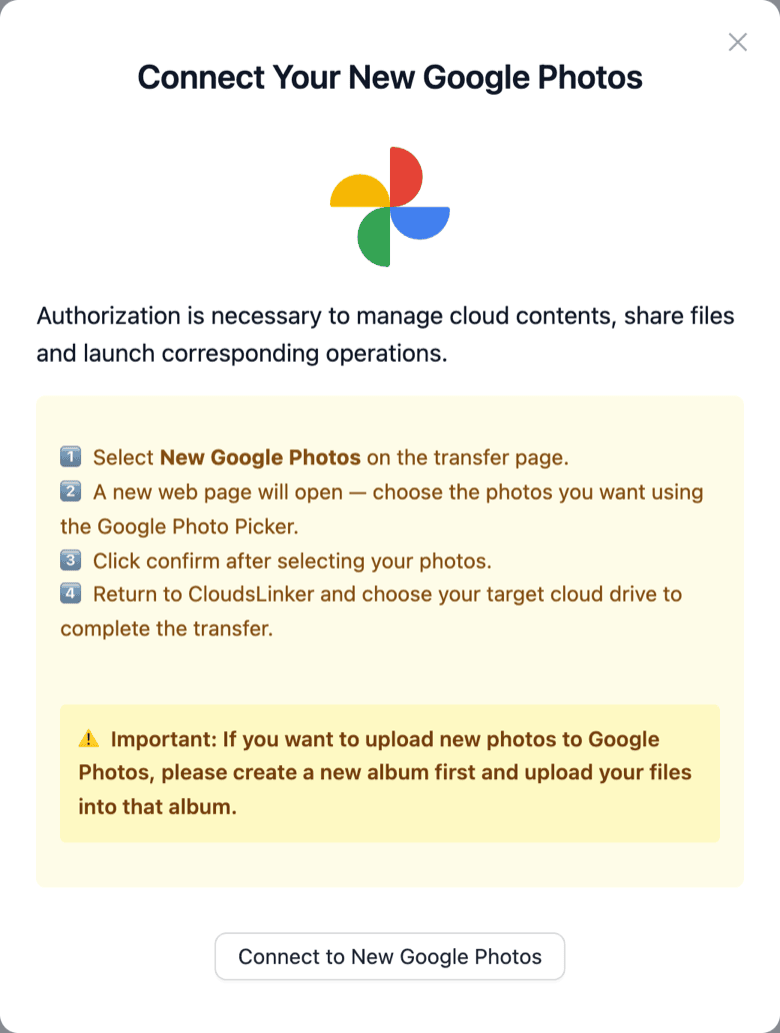
Log into CloudsLinker, click Add Cloud and choose New Google Photos, then sign in on Google's own page. Since April 2025 Google no longer lets apps read a whole Photos library, so this connection does not list your albums: you pick the photos for each transfer in Google's Photo Picker when you set up the transfer.
Step 2: Connect Dropbox to CloudsLinker
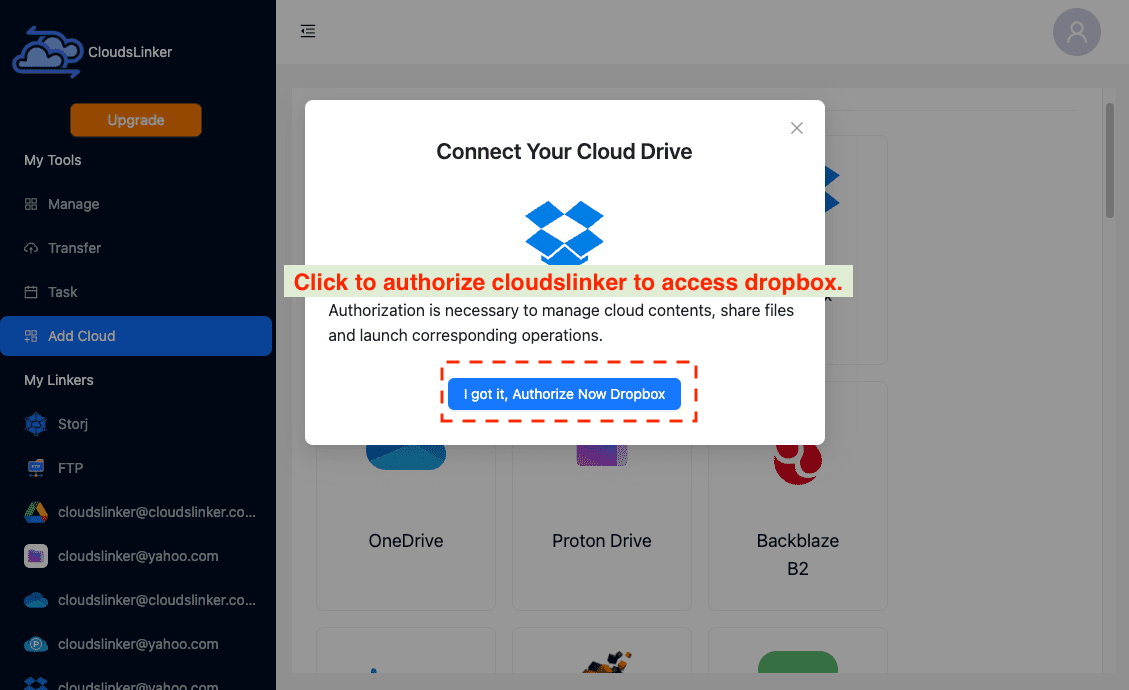
Next, link your Dropbox account to CloudsLinker for efficient file transfer. Navigate to CloudsLinker and log in. Select 'add cloud' and choose Dropbox, granting the necessary permissions for CloudsLinker to access your Dropbox files, facilitating a secure and streamlined transfer process.
Step 3: Configure Backup Settings in CloudsLinker
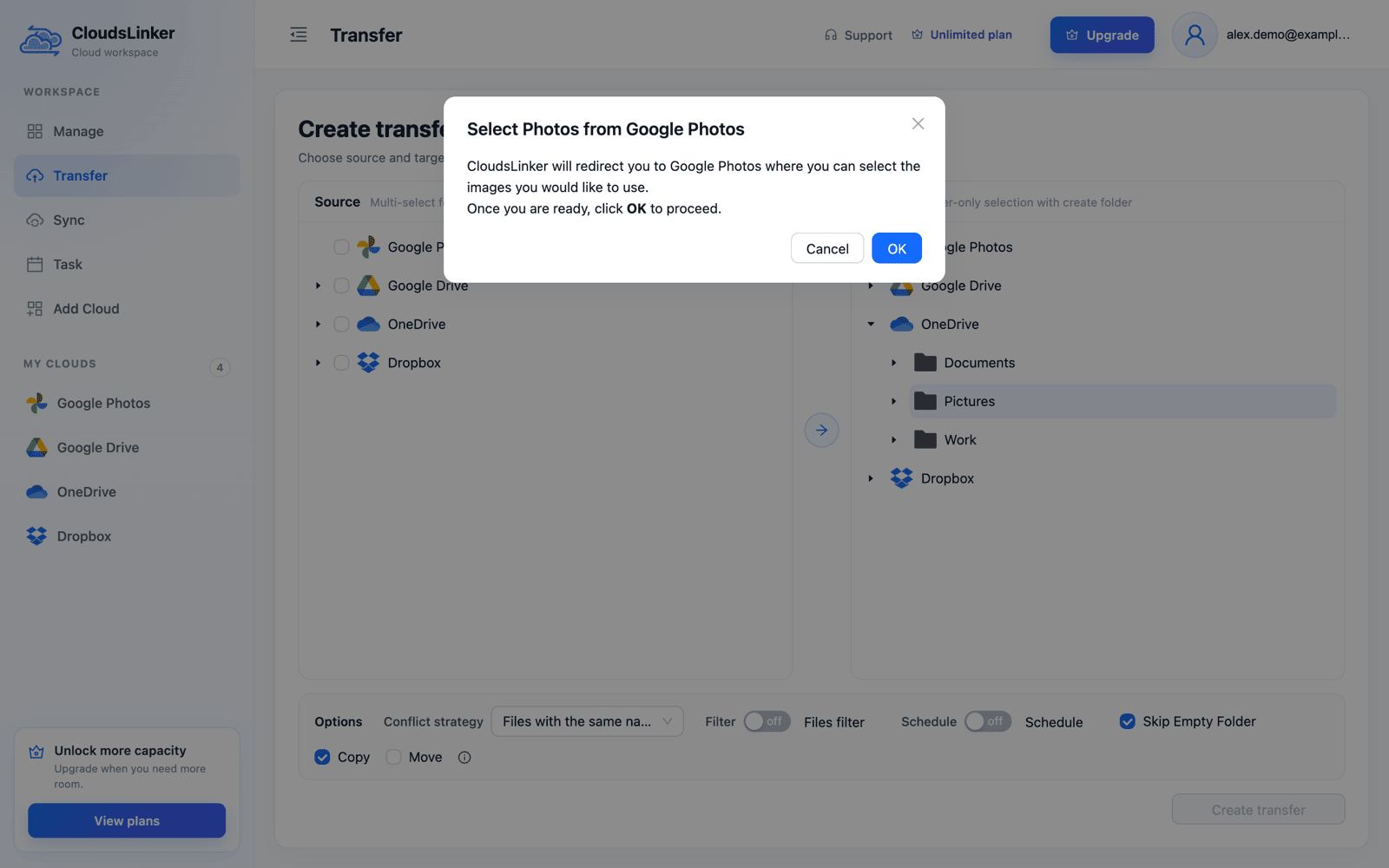
Open Transfer and tick New Google Photos as the source. CloudsLinker shows Select Photos from Google Photos: click OK, pick up to 2,000 photos and videos in the Google Photos tab that opens, confirm the selection and come back to CloudsLinker. Then select a Dropbox folder such as Photos/From Google as the target and click Create transfer. Picked items are copied as individual files: albums are not recreated, photos arrive without their location data and videos as Google's transcoded copy.
Moving the whole library with its albums? The Picker isn't built for that — use the Google Takeout route below.
Step 4: Initiate the Backup Process
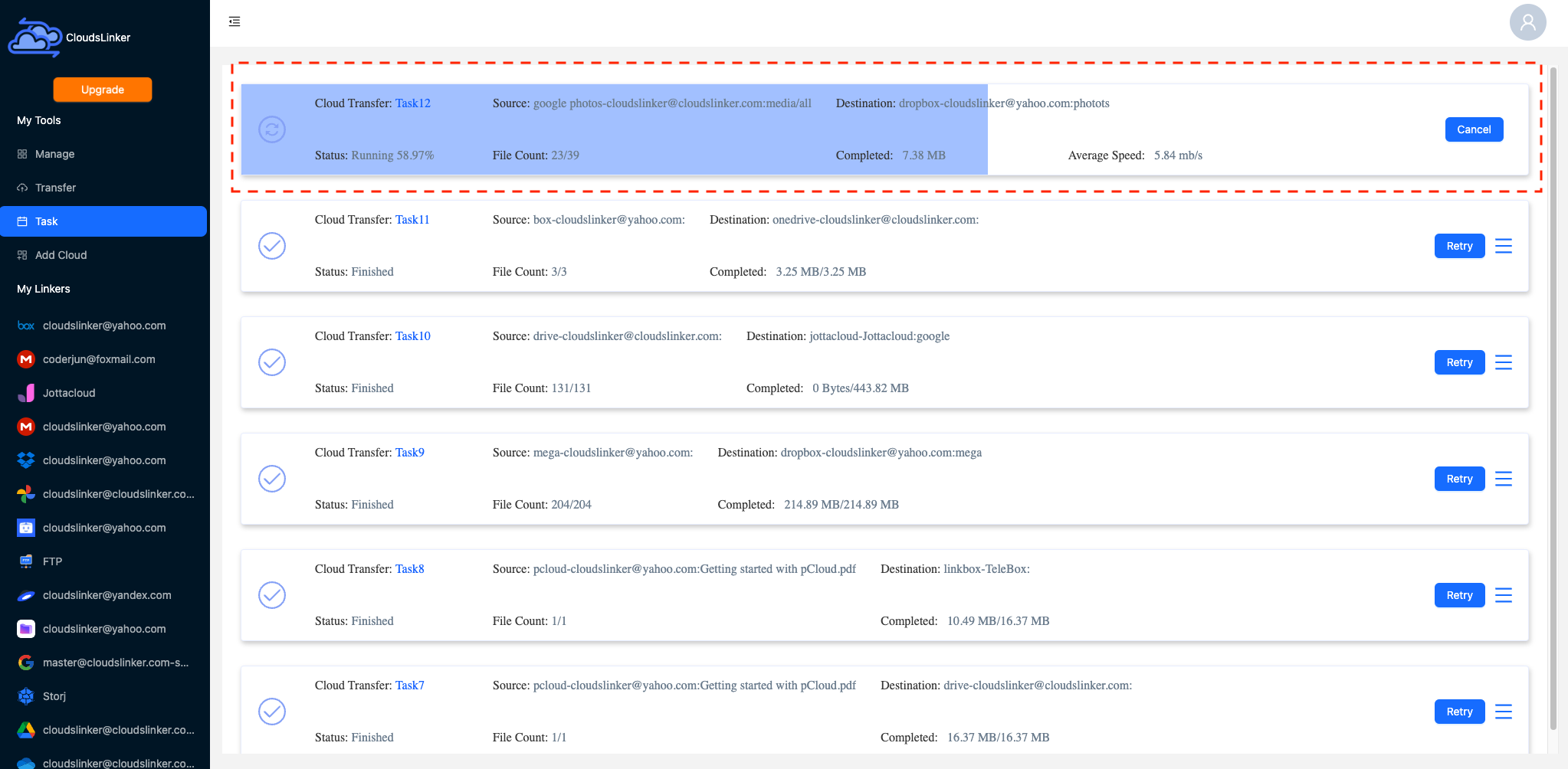
Start the backup operation in CloudsLinker by executing the configured transfer. CloudsLinker facilitates a direct cloud-to-cloud transfer from Google Photos to Dropbox, eliminating the need for local storage intermediary. Monitor the progress directly within CloudsLinker's dashboard for a transparent backup process.
Step 5: Verify Backup Integrity in Dropbox
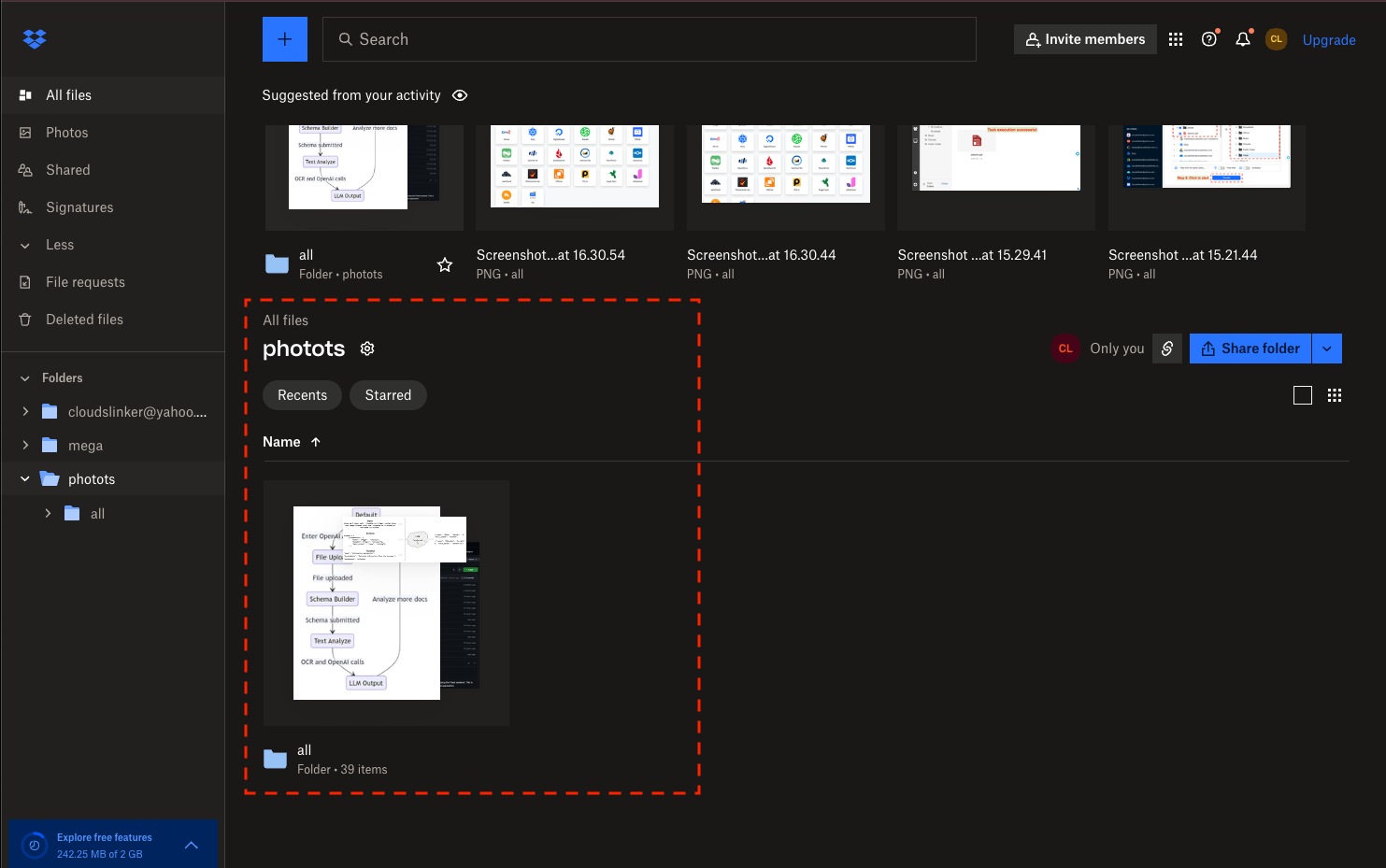
Once the transfer completes, verify that all selected Google Photos content has been accurately backed up to Dropbox. Check your Dropbox account for the new uploads, ensuring that all files are correctly organized and accessible, solidifying the success of your cloud-to-cloud backup.
Method 3: Whole Library, Albums Included — Unpack a Google Takeout Inside Dropbox
Google Takeout is the one export that still contains a whole Google Photos library as original files, album folders included. Dropbox is one of the four places Takeout can deliver to, which keeps this route short: the export lands in your Dropbox, CloudsLinker reads the zips where they are and copies the photos out of them into an ordinary Dropbox folder. Nothing is downloaded or unzipped on your computer, and the zips themselves are not changed.
Step 1: Have Takeout Deliver the Export to Dropbox
At takeout.google.com click Deselect all, tick Google Photos, and keep the .zip file type with 2 GB or 10 GB parts. Set the delivery method to Add to Dropbox and, when Dropbox asks, allow Google Download Your Data to use its own folder under Apps. Takeout emails you when every part has arrived, and the View in Dropbox link in that email opens the folder. Until you delete the zips the library takes up its size twice in Dropbox — once zipped, once unpacked — so check your free space first.
Step 2: Add the Zips as a Google Takeout
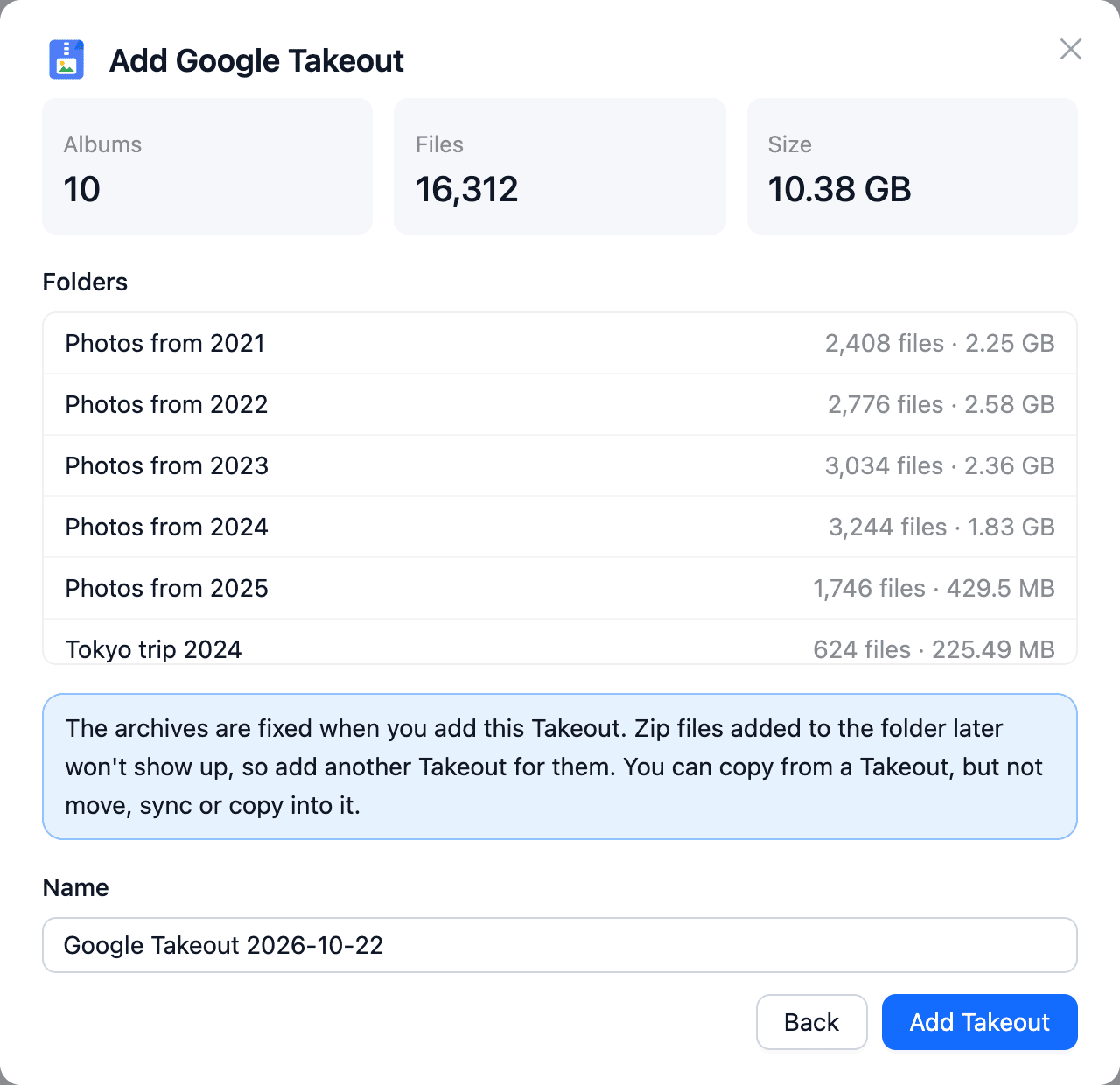
In CloudsLinker choose Add Cloud → Google Takeout (listed as Zip import). Set Cloud with your export to your Dropbox, tick the folder that holds the zips — every .zip inside it is included — and click Check archives. The review shows how many folders, files and gigabytes the export holds and lists any part it can't read, such as a .tgz or password-protected zip. Name the Takeout and click Add Takeout.
Step 3: Copy the Year or Album Folders into Dropbox
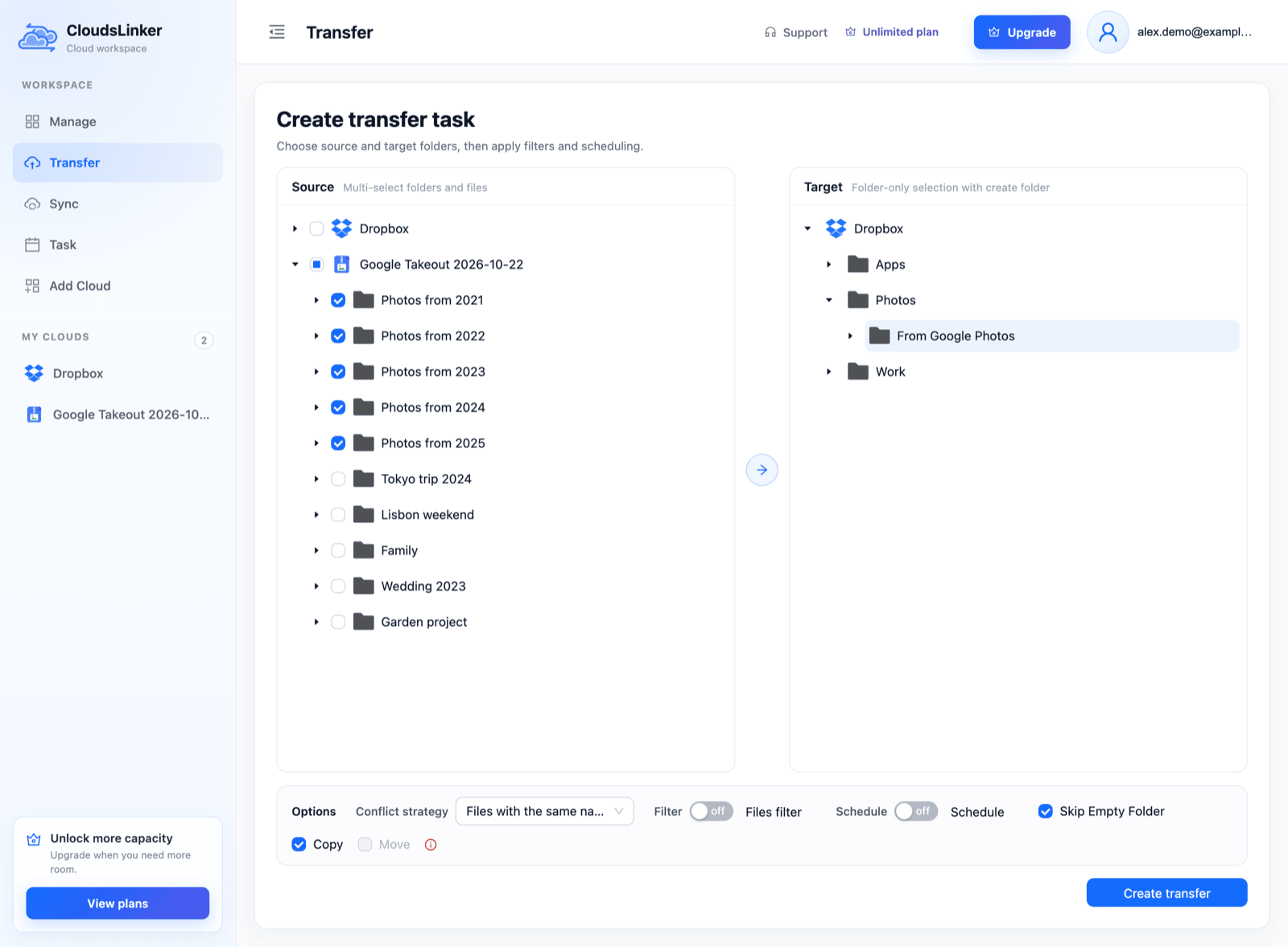
Open Transfer. Under Source expand the Takeout and tick the Photos from YYYY folders — together they hold every photo once. Under Target pick a Dropbox folder, or hover over one and create a new folder such as Photos/From Google Photos. A Takeout can only be read, so Copy is the only mode. Click Create transfer; the copy runs on CloudsLinker's servers and you can close the browser.
When the task is done, open a few folders in Dropbox, then delete the zips from the Apps folder to get the space back and remove the Takeout from CloudsLinker. Album folders repeat photos already in the year folders; copy them too only if you want the album grouping in Dropbox. Every photo also comes with a small .supplemental-metadata.json file — exclude json with Filter if you don't want them, but keep them if some pictures (screenshots, images saved from chats) have no date of their own. More detail: Unzip Google Takeout in the Cloud.
Leveraging Dropbox for Enhanced Digital Memory Preservation
Organizing Your Digital Memories in Dropbox
After backing up your Google Photos to Dropbox, organizing your memories efficiently is crucial for easy access and management:
- Create thematic folders: Establish folders in Dropbox to systematically sort your photos and videos, organizing them by event, date, or subject for effortless retrieval.
- Take advantage of Dropbox’s sharing capabilities: Use Dropbox’s advanced sharing features to securely share memories with family and friends, including customizable permissions and link expirations.
- Utilize selective sync: Opt for selective sync to manage which folders are stored on your devices, keeping your storage optimized and focusing on the most important memories.
Enhancing Security Post-Google Photos Backup
Security is paramount, especially when it comes to precious memories. Here are ways to bolster the security of your digital memories in Dropbox:
- Enable two-factor authentication: Enhance security by activating two-factor authentication for your Dropbox account, adding an extra layer of protection against unauthorized access.
- Regular password updates: Update your Dropbox password regularly to maintain a strong defense against potential breaches.
- Audit shared links and folders: Periodically review who has access to your shared memories and adjust permissions or revoke access as necessary to maintain control over your digital treasures.
Optimizing Your Dropbox Experience After Backup
Adapting your workflow to include Dropbox after migrating from Google Photos can unveil new possibilities for managing and sharing your digital memories:
- Explore Dropbox mobile apps: Leverage the convenience of Dropbox mobile apps to access and share your photos and videos anywhere, anytime, ensuring your memories are always at your fingertips.
- Integrate with other applications: Enhance your productivity by connecting Dropbox with other applications you use, creating a seamless workflow for managing and sharing your digital content.
- Customize Dropbox settings: Tailor your Dropbox experience by exploring various settings and features to suit your specific needs, making it an ideal platform for storing and sharing your digital memories.
Frequently Asked Questions: Google Photos to Dropbox Backup
How can I ensure the safety of my memories during the backup?
Why choose Dropbox over Google Photos for backup?
Can the backup from Google Photos to Dropbox be automated?
What strategies can prevent data loss during backup?
What are the costs associated with backing up from Google Photos to Dropbox?
Can I move my whole Google Photos library to Dropbox with its albums?
Watch Our Step-by-Step Video Tutorial
Learn how to use Cloudslinker to Migrate Photo Google Photos to Dropbox in this video! 🌐 Watch now and take control of your cloud storage.
Conclusion
Backing up Google Photos to Dropbox transcends simple data migration; it is a strategic move towards more secure, accessible, and organized digital memory preservation. This guide meticulously outlines each necessary step, highlighting Dropbox's commitment to safeguarding your digital treasures. Choosing Dropbox as your backup solution equips you with a robust platform for managing and sharing your memories with ease and security. For a complete library, the Google Takeout route is the one that keeps albums and original files: deliver the export to Dropbox, unpack it with CloudsLinker, then delete the zips.
Online Storage Services Supported by CloudsLinker
Transfer data between over 62 cloud services with CloudsLinker

OneDrive

Google Drive

Google Photos

Google Takeout

Shared Drive

OneDrive for Business

Dropbox

Box

Mega

pCloud

Yandex

ProtonDrive

AWS

GCS

iDrive

Storj

DigitalOcean

Wasabi

1fichier

PikPak

TeleBox

OpenDrive

Backblaze B2

Fastmail file

SharePoint

Nextcloud

ownCloud

Premiumize me

HiDrive

Put.io

Sugar Sync

SmugMug

Jottacloud

Seafile

Ftp

SFtp

NAS

WebDav

4shared

Icedrive

Cloudflare R2

Scaleway

Hetzner Object Storage

Synology C2 Object Storage

S3 Compatible

Doi

iCloud Drive

iCloud Photos

FileLU

Zoho WorkDrive

Telia Cloud / Sky

Drime

Filen

TeraBox

Internxt

Degoo

Gofile

Pixeldrain

Shade

Koofr

Dosya

Infomaniak kDrive
Didn' t find your cloud service? Be free to contact: support@cloudslinker.com
Further Reading
Effortless FTP connect to google drive: Transfer Files in 3 Easy Ways
Learn More >
Google Photos to OneDrive: 3 Innovative Transfer Strategies
Learn More >
Google Photos to Proton Drive: 3 Effective Transfer Techniques
Learn More >